

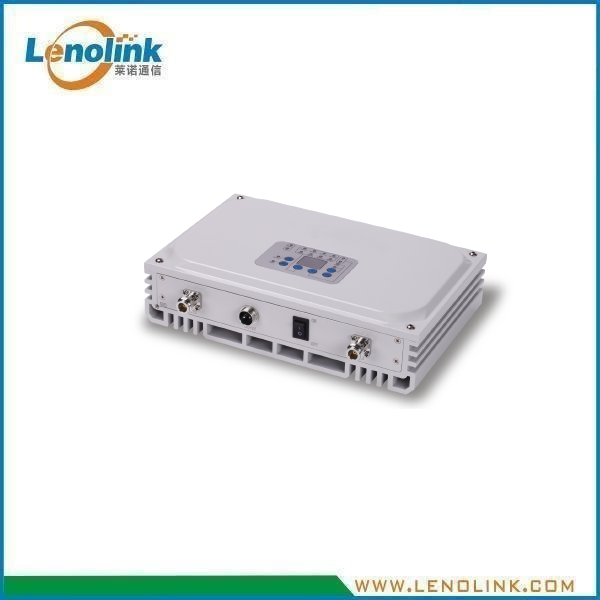
TETRA Band Selective Pico BDA
Product Model: LC7A20B1-1
Applications
TETRA Indoor Signal Coverage
The Lenolink LC7A20B1-1 is a TETRA band-selective Pico BDA (Bi-Directional Amplifier) designed for indoor TETRA radio coverage enhancement. The Lenolink TETRA Band Selective Pico BDA is designed to improve indoor TETRA radio coverage in areas where signals are weakened or blocked by building structures and other obstacles.
The BDA operates as a bidirectional RF repeater between the TETRA base station and radio terminals, receiving signals from the BTS through a donor antenna, amplifying the RF signals and retransmitting them through an indoor signal distribution system.
Typical applications include:
- TETRA indoor coverage
- Hotels Exhibition centers
- Shopping malls
- Office buildings
- Basements
- Underground facilities
- Parking facilities
- Transportation facilities
- Industrial buildings
- Public safety communication
Product Summary
The Lenolink LC7A20B1-1 TETRA Band Selective Pico BDA is a compact bidirectional RF amplifier designed to improve TETRA signal coverage in indoor areas affected by signal fading and attenuation.
The BDA receives the TETRA RF signal from the donor side, amplifies the signal and retransmits it through the indoor service antenna or RF distribution system. In a typical off-air repeater deployment, the donor antenna receives the RF signal from the TETRA base station and feeds the BDA.
Uplink signals from TETRA radio terminals are amplified in the reverse direction and retransmitted toward the BTS.
The LC7A20B1-1 supports:
- 453–458 MHz uplink/Rx
- 463–468 MHz downlink/Tx
- 5 MHz bandwidth
- 70 ± 3 dB maximum gain
- 20 ± 2 dBm maximum uplink output power
- 20 ± 2 dBm maximum downlink output power
- ≥20 dB MGC & AGC range
- ≤5 μs system delay
- 2 × N-Female RF ports
- AC 100–240 V input with DC 9 V/5 A output
- Wall mounting
- Indoor IP30 application
Typical System Configuration
The LC7A20B1-1 is installed between the TETRA base-station signal source and the indoor RF distribution system.
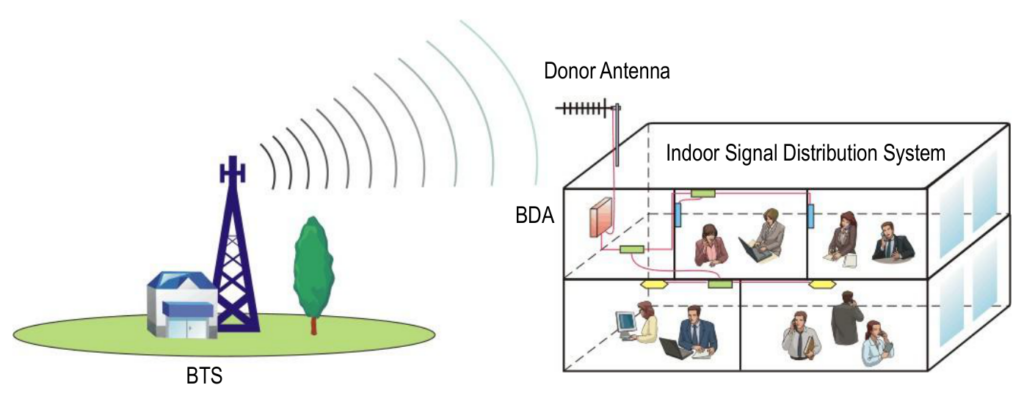
TETRA BTS → Donor Antenna → Pico BDA → Indoor Signal Distribution System → Coverage Area
The BDA receives the strongest available TETRA signal from the BTS through the donor antenna.
The signal is amplified and retransmitted through the indoor signal distribution system to areas where TETRA coverage is weak or unavailable.
The uplink signal follows the reverse direction:
TETRA Radio / Walkie-Talkie → Indoor Antenna → Pico BDA → Donor Antenna → BTS
This bidirectional architecture allows the BDA to improve both downlink and uplink TETRA coverage.
Key Specifications
| Parameter | Specification |
|---|---|
| Model | LC7A20B1-1 |
| System | TETRA |
| Uplink / Rx Frequency | 453–458 MHz |
| Downlink / Tx Frequency | 463–468 MHz |
| Bandwidth | 5 MHz |
| Maximum Gain | 70 ± 3 dB |
| Maximum Uplink Output Power | 20 ± 2 dBm |
| Maximum Downlink Output Power | 20 ± 2 dBm |
| MGC & AGC Range | ≥20 dB |
| Maximum Input Power, Non-Destructive | ≤−10 dBm |
| In-Band Ripple | ≤±3 dB |
| VSWR | ≤2.4 |
| System Delay | ≤5 μs |
| I/O Impedance | 50 Ω |
| Noise Figure | ≤6 dB |
| RF Connector | 2 × N-Female |
| Power Consumption | ≤25 W |
| Power Supply | AC 100–240 V input / DC 9 V, 5 A output |
| Dimensions | 188 × 265 × 68 mm |
| Weight | ≤5 kg |
| Operating Temperature | −10°C to +50°C |
| Relative Humidity | ≤85% |
| Application | Indoor, IP30 |
| Mounting | Wall Mounting |
| Local Control | USB Interface |
| NMS Mode | Cloud NMS or SMS via EC20 4G Wireless Modem |
Key Features
- TETRA 453–458 MHz uplink/Rx operation
- TETRA 463–468 MHz downlink/Tx operation
- 5 MHz SAW-filtered RF bandwidth
- 70 ± 3 dB gain
- 20 ± 2 dBm uplink output power
- 20 ± 2 dBm downlink output power
- ≥20 dB MGC & AGC range
- Linear RF power amplification
- ≤±3 dB in-band ripple
- VSWR ≤2.4
- System delay ≤5 μs
- Noise figure ≤6 dB
- 2 × N-Female RF ports
- Automatic isolation checking
- Smart Automatic Level Control
- Smart Mode gain adjustment
- Wall-mounted compact design
- AC 100–240 V input
- USB local control
- Cloud NMS or SMS remote monitoring via EC20 4G modem
- Indoor IP30 application
Technical Advantages
TETRA Band-Selective Coverage
The LC7A20B1-1 is designed specifically for TETRA indoor coverage applications.
It operates in the specified:
Uplink / Rx: 453–458 MHz
Downlink / Tx: 463–468 MHz
with a:
5 MHz SAW-filtered bandwidth
The band-selective architecture helps concentrate the repeater operation within the specified TETRA frequency range.
High Gain for Indoor Coverage Extension
The BDA provides a specified maximum gain of: 70 ± 3 dB
This allows the unit to amplify weak TETRA signals received from the donor antenna before retransmitting them into the indoor coverage system.
Actual coverage performance depends on donor signal level, antenna isolation, cable loss, indoor distribution architecture and installation conditions.
Bidirectional RF Amplification
The BDA supports both downlink and uplink signal amplification.
Downlink
BTS → Donor Antenna → BDA → Indoor Distribution System → Coverage Area
Uplink
Coverage Area → Indoor Distribution System → BDA → Donor Antenna → BTS
This enables two-way communication between TETRA radio terminals and the base station.
Smart Automatic Level Control
The Smart Automatic Level Control (ALC) function helps regulate the RF operating level according to changing signal conditions and repeater operating status.
MGC (Manual Gain Control) and AGC (Automatic Gain Control)
The specified MGC & AGC adjustment range is: ≥20 dB
This provides flexibility for RF level adjustment during system installation and commissioning.
Automatic Antenna Isolation Check
Auto Isolation Check between service and donor antennas as one of the product features.
This is particularly important for repeater installation because insufficient isolation between donor and service antennas may lead to feedback or self-oscillation.
The BDA also provides an alarm for uplink self-oscillation and performs an isolation check during boot-up.
Smart Mode Gain Adjustment
The LC7A20B1-1 supports a Smart Mode designed to automatically adjust gain according to the isolation condition and the received signal level at the donor site.
This feature can simplify system commissioning and help maintain stable repeater operation.
Linear Power Amplification
The BDA uses linear RF power amplification to help suppress intermodulation and spurious emissions.
The specified noise figure is: ≤6 dB
and the specified spurious emission limits are:
- 9 kHz–1 GHz: ≤−36 dBm
- 1 GHz–12.75 GHz: ≤−30 dBm
Compact Indoor Installation
The LC7A20B1-1 has a compact enclosure: 188 × 265 × 68 mm
with a maximum weight of: ≤5 kg
and is designed for: Wall Mounting
The specified application is: Indoor (IP30)
This makes the unit suitable for installation in indoor technical rooms, offices, basements, shopping malls, hotels and parking facilities.
Working Principle
How Does a TETRA Pico BDA Work?
A TETRA Band Selective Pico BDA works as a bidirectional RF relay between the TETRA base station and radio terminals. The LC7A20B1-1 operates as a bidirectional RF amplifier between the donor antenna system and the indoor service antenna system.
Downlink Signal Path
TETRA BTS
↓
Donor Antenna
↓
LC7A20B1-1 Pico BDA
↓
Service Antenna / Indoor RF Distribution
↓
Indoor Antenna
↓
TETRA Coverage Area
The donor antenna receives the TETRA signal from the BTS.
The BDA amplifies the received RF signal and retransmits it through the indoor signal distribution system.
This improves signal availability in indoor areas where the original BTS signal is weak.
Uplink Signal Path
TETRA Radio / Walkie-Talkie
↓
Indoor Antenna
↓
Service Antenna / Indoor RF Distribution
↓
LC7A20B1-1 Pico BDA
↓
Donor Antenna
↓
TETRA BTS
The BDA amplifies the uplink signal and retransmits it toward the BTS.
Antenna Isolation and Self-Oscillation Protection
Why Is Antenna Isolation Important?
In a TETRA repeater system, the donor antenna and service antenna need sufficient isolation.
If the amplified output signal is coupled back into the donor input with excessive level, feedback may occur and lead to self-oscillation.
The LC7A20B1-1 therefore incorporates:
- Automatic isolation checking
- Smart Mode gain adjustment
- Uplink self-oscillation alarm
- Isolation check during boot-up
Why Choose Lenolink TETRA Band Selective Pico BDA?
TETRA-Specific RF Design
The LC7A20B1-1 is designed specifically for TETRA RF coverage applications rather than general-purpose broadband signal amplification.
The specified operating frequencies are:
453–458 MHz Uplink/Rx
463–468 MHz Downlink/Tx
Band-Selective Operation
The BDA uses a specified 5 MHz SAW filter for uplink and downlink, helping provide frequency-selective operation within the TETRA band.
Intelligent Repeater Control
The combination of:
- Smart ALC
- MGC & AGC
- Smart Mode
- Automatic isolation checking
- Self-oscillation alarm
provides an engineering-oriented control architecture for TETRA indoor repeater deployment.
Easy Installation
The compact wall-mounted enclosure and external AC/DC adapter simplify installation.
Remote Monitoring Capability
The product supports: Cloud NMS or SMS via EC20 4G Wireless Modem
This provides an option for remote monitoring and management in addition to local USB control.
Engineering Support & Customized RF Solutions
Lenolink can evaluate TETRA repeater requirements based on donor signal level, required coverage area, RF gain, output power, antenna isolation, service antenna configuration and monitoring requirements.
Typical Applications
The LC7A20B1-1 can be considered for TETRA coverage improvement in:
Hotels
Improve TETRA radio availability in interior rooms, corridors and other areas affected by building attenuation.
Shopping Malls
Extend TETRA coverage across large indoor commercial spaces.
Basements
Help address RF attenuation in underground and basement areas.
Parking Facilities
Provide improved TETRA communication coverage in enclosed parking areas.
Offices
Improve indoor TETRA coverage in office buildings and other commercial facilities.
Exhibition Centers
Support TETRA coverage in large indoor venues.
Frequently Asked Questions
Q1: What is a TETRA Band Selective Pico BDA?
A TETRA Band Selective Pico BDA is a bidirectional RF amplifier used to improve TETRA radio coverage in areas where the BTS signal is weakened by building structures or other obstacles.
Q2: What frequency does the LC7A20B1-1 support?
The specified frequency configuration is:
Uplink / Rx: 453–458 MHz
Downlink / Tx: 463–468 MHz
Q3: What is the bandwidth?
The specified bandwidth is: 5 MHz
using a SAW filter for uplink and downlink.
Q4: What is the maximum gain?
The maximum gain is: 70 ± 3 dB
Q5: What is the output power?
The specified maximum output power is:
Uplink: 20 ± 2 dBm
Downlink: 20 ± 2 dBm
Q6: Does the BDA support automatic gain control?
Yes.
The specification identifies an MGC & AGC range of ≥20 dB.
Q7: Does the BDA support automatic isolation checking?
Yes.
The product features include automatic isolation checking between the donor and service antennas.
Q8: Does the BDA have self-oscillation monitoring?
Yes.
The specification identifies an alarm for uplink self-oscillation and an isolation check during boot-up.
Q9: What RF connectors are used?
The BDA uses: 2 × N-Female RF connectors
Q10: What is the system delay?
The specified system delay is: ≤5 μs
Q11: What is the maximum non-destructive input power?
The specified maximum input power is: ≤−10 dBm
Q12: What is the power consumption?
The specified maximum power consumption is: ≤25 W
Q13: What is the power supply?
The specified power supply is:
Input: AC 100–240 V
Output: DC 9 V / 5 A
Q14: What are the dimensions?
The dimensions are: 188 × 265 × 68 mm
The maximum weight is: ≤5 kg
Q15: Is the BDA suitable for outdoor installation?
No. Based on the supplied specification, the application is: Indoor (IP30)
with an operating temperature range of −10°C to +50°C.
Q16: How can the BDA be controlled?
Local control is available through a USB interface.
The product also supports Cloud NMS or SMS via an EC20 4G Wireless Modem for NMS functionality.
Q17: Where can this TETRA BDA be used?
Typical applications include:
- Hotels
- Exhibition centers
- Basements
- Shopping malls
- Offices
- Parking lots
- Indoor TETRA weak-signal areas
Q18: Can Lenolink customize the TETRA BDA?
For customized requirements, Lenolink can evaluate the customer’s:
- TETRA frequency
- Coverage area
- Donor signal level
- Required gain
- Output power
- Antenna configuration
- Isolation requirements
- Monitoring requirements
- Mechanical installation requirements
Q19: What is the difference between a TETRA BDA and a TETRA fiber optical repeater?
A TETRA BDA directly amplifies and retransmits RF signals between the donor and service antenna systems, while a fiber optical repeater uses optical fiber to distribute RF signals between a Master Unit (MU) and Remote Units (RUs).
Q20: How much antenna isolation does a TETRA BDA require?
The required antenna isolation depends on the repeater gain, donor signal level, output power and installation configuration. Lenolink recommends evaluating donor-to-service antenna isolation during system design and commissioning.
Q21: Can the LC7A20B1-1 be used outdoors?
No. According to the specified configuration, the LC7A20B1-1 is designed for indoor installation and is rated IP30. For outdoor TETRA coverage applications, a suitable outdoor-rated repeater configuration should be selected according to the environmental requirements.
Note: The supplied specification does not explicitly state a list of customizable parameters, so this section should be presented as an engineering evaluation capability rather than a claim that every parameter is standardly customizable.
Request a Customized TETRA Indoor Coverage Solution
Need a TETRA BDA for Your Indoor Coverage Project?
Please provide:
✓ TETRA frequency range
✓ Uplink and downlink frequencies
✓ Required coverage area
✓ Donor signal level
✓ Required gain
✓ Required output power
✓ Donor antenna information
✓ Service antenna information
✓ Required antenna isolation
✓ Indoor RF distribution configuration
✓ Monitoring requirements
✓ Installation environment
✓ Power supply requirements
Lenolink RF engineers can evaluate your project requirements and recommend a suitable TETRA band-selective BDA configuration.
Contact: info@lenolink.com